
Monday, May 21, 2007
Can we save the environment?Before I jump straight to the question on whether we can save the environment, we should think on a few factors to consider.
Who has to play a part in saving the environment?
What can we do to save it?
Where can we start off to save the environment?
When can we do it?
How can we do it?
Considering on these factors, we can come to a solution. But again, is the environment really worth saving? The environment has lived for quite a long period of time even before we were born. Ever since the dinosaur period, the environment is already here. Now, we are sharing the same environment as before. What is the only difference from before and after? Well if I could put it in a simply way to say it, I would say, before, it was healthier. Now, it’s like a piece of wasteland. Since humans started to live on Earth, we discover many new things out of curiosity.
As the proverb goes, ‘curiosity kills the cat’, in this case, curiosity kills the environment. Not knowing that each time we discover something new, the environment has to sacrifice something too. For example, where to our writing papers come from? They come from trees! See the link? We discover paper and we’re happy with it. The environment loses trees and of course she’s not happy with it. We cannot find out how the environment is feeling. We can’t tell whether it is happy or sad, that’s because the environment can’t speak. It’s up to us to tell ourselves whether the environment is suffering badly or not. We take things for granted. For example, seeing that there’s so many rare living species that can up boost human health, the poachers seek out in the wilderness to hunt for these animals, and sell them in the market for big money. As too many of them are hunted, they end up endangered.
I admit that humans are greedy people. Who isn’t money minded? Everything in the world talks about money. Everyone aims to be rich. In industrial areas, factories work extremely hard to boost profit, earning more money as usual. They do not really bother on what method they use, they just want money. They neglect the environment by doing this. Each time they work, the factories emit toxic fumes and waste to the environment. Let us refer to the case that happened in Russia – St. Petersburg. Again, we talk about humans harming the environment. Taken from ‘http://news.bbc.co.uk/2/hi/europe/3007228.stm’, reported by BBC. Here, we have a case of untreated sewage flowing from St. Petersburg to the Neva river, then to the Baltic sea.
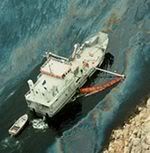
Taken from ‘http://www.helcom.fi/environment/assessment/en_GB/assessment’
This image shown above is the Baltic sea during the pollution. Much effort was taken to clean up the sea.
Below is another image of what happened during the pollution.
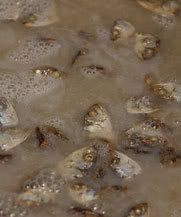
Taken from ‘http://www.healthypages.net/newsstory.asp?newsid=4851’
As shown, these fishes died during the pollution. It certainly isn’t a pleasant sight to look at it.
So now, onto the main topic. Can we really save the environment after all have happen? We all know that the answer to that question would definitely be a NO. We can’t really turn the environment back to what it was before. All we can do is, contain and minimize harmful effects to the environment. All of us should know by now. Only we can play a part to save the environment. Of course, the environment doesn’t have hands to save herself, but we do! It is true that each and even one of us cannot really do much to help, but by doing what we really can do, we can lessen the burden of the environment, prolonging her life. At the same time, we gain by having a clean and green Earth to live in.
Firstly, we humans can start off by controlling pollution.
Stop disposing toxic wastes into the waters! They would only harm the marine life. When marine lives are killed, fishermen get nothing for their harvest. As a result, we consumers get nothing to eat. Dispose these wastes properly. Go through proper treatment before throwing them out into the environment. This way, lives could be saved.
Stop intensive agriculture! Take the pig farming in Poland for reference. This farm named Smithfield Foods only knows how to earn money. They do not take the environment in regard to what they are doing. They keep all their thousands of pig in a single room and leave them there. Naturally, pigs would give out manure when they need to, like we humans, but having too many pigs and having too much manure in one single room would stink the entire vicinity. If pig manure is not taken care of properly, it could turn into a dangerous pollutant. These manure produces ammonia and hydrogen sulphide which, in high concentrations, cause headaches, eye irritations, mood alterations and fatigue. In addition, nitrates from the manure can seep through the soil and into the water systems. It can cause serious problems for marine animals and can be a risk for human health. Pig manure can contain antibiotic resistant diseases also, which is dangerous to us too.
Credits to ‘http://news.bbc.co.uk/2/hi/science/nature/4035081.stm’
Next. Where can we start off to save the environment?

Taken from’ http://www.swdahsv.org/faq.html’
This is an easy question to answer. From home, we can already save the environment. Recycle what we can and dispose what we can’t. It saves the environment by recycling.
Reuse items that can be used again. Do not always wish to get new items to use. Everyone is trying to save the world.
Reduce the amount of items we throw. At the same time, reduce the amount of water and electricity we use. If its possible to save, please do.
Now onto, where can we do it?
Anywhere of course! Be it at home or outside home. With just our two pairs of hands, anything can be done, but please do not litter. Use appropriate rubbish bins for proper disposal.
How can we do it?
We can spread the word to other people, telling them to note what they waste each day.
Following all these methods, we could at least keep the environment in shape, but as time goes by, the environment would still have to leave us, and at the same time, we would leave the environment.
Sunday, May 20, 2007
SynthesisYou might ask, is the Earth really worth saving? Well, here’s my answer. The Earth has to be saved. If we do not save the Earth, where are we going to live in? We can’t possibly migrate to Mars and live there without any proper living conditions. The benefit of saving the Earth is to save ourselves from living in despair. With the environment we have now, we can’t possibly say that the environment is healthy. We have to live longer for ourselves and the environment.
What are the biggest threads to the environment? I should say we are the biggest thread. Why? Be it big or small, everything we do harms the environment. For example, the pesticides that the farmers spray release chemicals into the air, causing us to breathe in polluted air.
Can the Earth be saved? Yes it can, but however, it cannot be totally saved. What we can do is just maintain what we have now and prolong our environment.
Start by controlling the amount of toxic materials being released into the environment. Use proper disposal methods. Do not wash acids down the pipes to the sea. Everyone has a part to play in this. We cannot make this a success if one person is left out. The environment is dying as the clock ticks. The government needs to be alert incase of any pollution. Fast actions should be taken to control it. Citizens should use solar panels cars to save petrol and emit less harmful gases. The industries should dispose their waste properly, as they as toxic and dangerous. Farmers should control their amount of pesticides sprayed and lesser toxic chemicals in the pesticide.
Why is the environment important and how does it affect plants and humans?
As we dump harmful materials out to the environment, we do not really know what and how does it affect the planet. As we know, the environment is the world we live in. We need to keep it healthy and in shape to provide us a better life. If our environment is not taken care of properly, our lives will be shortening by a big portion.
Where do all the harmful causes come from? Many come from industrial areas. These factories make a living by producing products to sell in the market, but on the other hand, do they really know that at the same time, they are harming the environment. Like in Europe, the releasing of toxic fumes causes acid rain. Acid rain damage building and plants, and if unlucky, humans will be affected too. Another example is the e-recycling in India. Taken from the BBC news ( http://news.bbc.co.uk/2/hi/south_asia/3307815.stmhttp://news.bbc.co.uk/2/hi/south_asia/3307815.stm ), up to thirty million computers are thrown from the US and dumped in India and China. These old computers have a lot of toxic materials hidden in them, such as mercury, lead, flame retardants, and PVC-coated copper wire. When these materials are being extracted, heavy metals and chemicals are released into the environment, which is of course, an unfortunate thing of the environment. The process of extraction uses all kinds of chemicals such as acids, which gets dumped into the soil and go into the groundwater. As it happens, it also affects the economy. Acids flow into the sea, killing the marine life. As a result, fishermen do not get as much harvest as they do normally. The pollution in Baltic Sea is an example. Untreated sewage flows into the Neva river from St. Petersburg then to the Baltic Sea. The Swedish is concerned because fishing is important to their economy. It would take a long time to clean the sea before they could fish again. The greenhouse effect affects the environment ecologically. The huge amount of ice in South Pole will cause sea levels will rise and people will drown.
How healthy is the environment today? No! The environment isn’t as healthy as before. With the amount of harmful gases released into the air, we do not breathe in fresh air anymore. Adding to that, the waters contain chemicals. Living beings find it hard to get fresh environment to live in. This is specially referred to the marine life where they find it hard to live in a chemical polluted environment.
What are the biggest threats to the environment? Pollution that is! The amounts of harmful wastes are killing the Earth! Something must be done to it!
How do we save the environment? Reduce pollution. Control the amount of wastes being dumped each day. Save electricity generation by using solar panels.
Saturday, May 19, 2007
TOPIC 15: Greenhouse effectThe greenhouse effect is the ability of the atmosphere to capture and recycle energy emitted by the Earth surface. The Earth gets energy from the sun by radiation and warms the Earth surface. Greenhouse gases are gases such as carbon dioxide and nitrous oixide. Global warming brings about the effects of increasing in temperature, increase of sea levels and decrease in land area. By using renewable energy sources such as stopping the burning of forests and cutting down the release of greenhouse gases from industries, these effects can be slowed down,giving us a better life and saving the Earth.
Credits to Wikipedia. http://en.wikipedia.org/wiki/Greenhouse_effect
TOPIC 14: Bhopal Gas tragedy
http://www.hu.mtu.edu/hu_dept/tc@mtu/papers/bhopal.htm
Central India, Bhopal - Union Carbide pesticide plant produces carbaryl, and methyl isocyanate is an intermediate in carbaryl manufacture.This company manufactures pesticide and supply it to local farms to help boost production speed. An incident, named as the Bhopal Gas Tragedy, brought upon dismay to the locals. A poisonous vapor burst from the talls stack of the plant, releasing a highly toxic cloud of methyl isocyanate. This incident was caused by the addition of water into MIC, and due to slip-blind water isolation plates being excluded, the reaction generated a major increase in temperature in the tank. The MIC gave off a large volume of toxic gas, and was released to the air due to high pressure release. Many people were dead and injured in this incident.
Industrial accidents happen mainly because of the ignorance of humans. It not only can cause death, it can also cause misfortune to the country too. Such cases should not be overlooked as it poses great threat. We should also be careful when facing a threat like this.
Credits to Wikipedia. http://en.wikipedia.org/wiki/Bhopal_Disaster
TOPIC 13: Cadmium in fertilizers/peanuts: Oz
http://www.foodstandards.gov.au/newsroom/factsheets/factsheets1999/cadmiuminpeanuts.cfm
http://www.environmental-expert.com/articles/article1346/article1346.htm
Cadmium is a chemical commonly found in pesticides. This chemical is commonly found in crops and can cause kidney damage is large amounts are eaten. Even by eating large amounts of greens will not help by getting rid of any chemicals that are in the body. There has been a change in the level of cadmium being used by lowering the amount to make food safer for consumption.
Crops are now safer for consumption with the levels of Cadmium been lowered. People should just look out for their own health too.
TOPIC 12: Mercury poisoning: Siberia
http://news.bbc.co.uk/2/hi/europe/2062595.stm
Siberia - Mercury from a polluted industrial site has posed serious danger to the people and the environment. As the mercury continues to leak into the soils and rivers, citizens continue to eat the intoxicated fishes. As a result, people complain of headaches, respiratory and intestinal diseases and hand tremors. In long-term, people can die from mercury poisoning. Cleaning up of the industrial site is in progress but all doesn't seem too well as they claim that there isn't enough funds to boost the process.
There has been a similar case at Minimata Bay in Japan in 1952 when effluent from a factory have reached local waterways. Many were poisoned from eating contaminated fish. Nearly 70 people died, and 100 others were unaffected.
Officials have to boost up the cleaning process for these polluted industrial sites and not delay it. If not treated fast enough, the population may be wiped out.
TOPIC 11: Pollution in the Baltic
http://news.bbc.co.uk/2/hi/europe/3007228.stm
From St. Petersburg, untreated sewage flows to the Neva river, then to the Baltic. Now half of the fish species are at levels below the critical biological level. Even pregnant women are warned not to eat herring because of dioxins. The Baltic sea is suffering from lack of oxygen because of all the untreated sewage, allowing the plankton and algae growth. Having only a narrow outlet to the ocean, the water will take 25-30 years to refresh itself.
People in St Petersburg are mainly being irresponsible to their own country's water by simply throwing waste products into the water without what is going to happen next. Such case will affect the fishes growth, which in other words, affects Sweden's economy.
TOPIC 10: Effect of mining activities on the environment & human health
http://news.bbc.co.uk/2/hi/business/6103382.stm
Russia - Hibini Mountains. Once a place with natural beauty surrounded by forests, have changed into a tundra. Once the home of the good grazing reindeer have changed into nothing. What is left is the leafless trees of Hibini Mountains. The reason behind all this is because of the mining and smelting activities.
Russia being dependant on mining and smelting of metals for their economy, have taken a step forward to use the Hibini mountains as a place for their sources. Thus, many giant mining and smelting companies have came out with plans of expansion.
If these massive mining and smelting activities are going to continue, not only many species of animlas are going to lose their homes, workers too are going to lose their life. It is possible for the miners to suffer from illnesses, ranging from throat irritation to cardio respiratory disease and cancer. Although not scienticfically proven, many suspect that workers get sick either by inhalation of dust particles or caused by emissions.
Concerned more about their economy, companies do not bother about the aftermath of human health and environment. These selfish and irresponsible means of ways to get rich will just cause more damage done to the environment.
TOPIC 9: e-waste recycling-india
http://news.bbc.co.uk/2/hi/south_asia/3307815.stm
Almost every year, thirty million computers are thrown into India or China for recycling. Now with the overloaded amount of waste, India has a concern. These equipment contain toxic materials like mercury, lead, flame retardants, and PVC-coated copper wire. These heavy metals and chemicals are actually disasters for the environment. Computer recycling involves the process of people stripping down the computers and extract parts to be sold in the high street. The rest are burned or dumped, which is both potentially highly hazardous to the enivronment. The process of extraction uses all kinds of chemicals which gets dumped into the soil or the groundwater, and the burning of PVC-coated copper wire releases dioxins, which is released into the environment. This job involves risks for the people who work for it. It can develop skin rashes as well as respiratory diseases.
To prevent anymore problems, computer companies have requested to take back their own computers for recycling through the right process. At the same time, manufacturers have eliminated the harmful substances inside the machines.
In conclusion, e-recycling in India have caused a great deal of problems for them. Not only the pay is low, but there is no level of safety when working for these. The recycling process also affects the environment, causing the people to develop illnesses.
TOPIC 8: Mothballs: not just for humans
http://news.bbc.co.uk/2/hi/science/nature/76115.stm
Mothballs are commonly used by humans to keep moths and carpet beetles away from clothes. How does mothballs work? According to researchers, naphthalene, is the active ingredient in mothballs. Curious why the termites were not affected by naphthalene, the scientists carried out tests on the termites greatest enemy, the fire ants, and termites itself. Apparently, termites were not being affected in anyway, but the fire ant were immobolised.
Therefore, mothballs can not only be used by humans to keep insects away from their clothings, but mothballs can be used by insects to keep away other insects. For example, the termite and the fire ant.
TOPIC 7: Pesticides: Good or bad?
http://news.bbc.co.uk/2/hi/programmes/politics_show/3873761.stm
People in the countryside east of England are facing air problems with pesticides clouding their areas. Families have fallen ill due to the pesticides that are being sprayed on the crops. With fields surrounding their homes, Mrs Wadey is one of the victims who's family and home is being damaged by these spraying. Her first child was born partially sighted and asthmatic. When she was having her second child, she approached the farmer to ask if the sprays were safe, but the farmer couldn't answer her. Another victim was Sally Brown. Unfortunately, her dog and herself was being caught in a cloud of chemicals when a farmer was spraying nearby. Immediately, she brought her dog inside the house and gave it a bath, then she had a through shower. What happened next was her dog died of cancer and she was caught with cancer. Environmentalists and campaigners requested the impose of buffer zones between homes and fields that has to be sprayed, but failed.
No one could give a sure answer on whether pesticides are really good or bad. The reason they are good is because they keep pests away from the crops, leaving them in a better condition when being sold. The reason they are bad is because they are harmful to the human body. What we can do to control this is impose buffer zones between fields and homes, so the people living in the area won't be affected by the pesticides.
TOPIC 6: Pesticides in a third of all our foods
http://news.bbc.co.uk/2/hi/health/5384138.stm
Case-study reports: Nearly a third of UK food and drinks, including fruits and vegetables, contains pesticide. Out of the166 samples of food tested, 132 had chemical traces either at or below the maximum permitted levels. Another 3 samples had residues above the legal limits. Committee chairman Dr Ian Brown said the findings were not a cause for health concerns as the pesticide levels are still safe.
Farmers like to spray their crops to keep pests away. As long as they do not exceed the pesticide safety level, these crops are still safe for consumption. If they do exceed, the crops will not be able to be sold to market or wholesale suppliers.
Thursday, May 17, 2007
TOPIC 5: How healthy are barbequed foodshttp://news.bbc.co.uk/2/hi/programmes/breakfast/4585353.stm
We love barbequed food, and almost at any point of our life, we eat barbequed food. But how healthy are barbequed foods?
Incorrect handling and cooking of bbq food can cause food poisoning to people.
Therefore, there is a safety guideline to follow when bbq-ing. For example, using charcoal instead of methylated spirits, petrol or lighter fuel when making a fire; overcooking meat may produce harmful chemicals, undercooking would also allow bacteria to survive in the meat and etc.
Barbequeing affects the air environment and cause cancer too, so take precaution when eating barbeque food.
TOPIC 4: Pearl river delta and Yellow river
http://news.bbc.co.uk/2/hi/asia-pacific/4642090.stm
Noted that China has a total of 21,000 chemical plants located along the rivers and coastline, this have definitely caused a threat to all residents.
Little amounts of chemicals would be released from the plants to the waters each time, creating an increasing effect to chemicals. Day by day, the amount of chemicals totaled up would be enough to kill.
After looking at this, i know for sure, China is not a safe place unless the waters are treated with care.
TOPIC 3: Harbin leak: China
http://news.bbc.co.uk/2/hi/asia-pacific/4474284.stm
This kind of an accident would have caused a total wipeout in population if not taken care of properly. The explosion at a petrochemical plant in Jilin have caused the rivers to be contaminated by oil, resulting in a cut off of water supply for up to 40 hours and closure of schools, childcare and restaurants in Russia. Sites affected are Jilin and Harbin, along with Khabarovsk. Water runs along Songhua river to Amur river in Russia, then to the sea.
Apparently, the China officals have taken their time in solving the accident. No one knows if this was a deliberate attempt to harm Russia or anot. But in anyway, the sea would definitely have been affected badly and lots of marine life would be wasted by oil pollution.
TOPIC 2: Moses and the 10 plagues: caused by water pollution?
http://www.bbc.co.uk/religion/religions/judaism/history/moses_4.shtml
The Ten plagues
The first plague - river water turned to blood
The second plague - frogs
The third plague - gnats
The fourth plague - flies
The fifth plague - death of livestock
The sixth plague - boils
The seventh plague - hail
The eighth plague - locusts
The ninth plague - darkness
The tenth plague - death of the firstborn
These plagues come from a long way back. Some people believe this is God's doing. For scientific experts, they believe that there is a reason why these would happen.
According to the pfisteria theory....
Huge amounts of pig waste have made their way to the river, causing a genetic mutation in a marine micro-organism called pfisteria, turning it from harmless to lethal, poisoning the marine animals in the river. As the fishes die, the river would turn red. By then, the frogs would have gotten out of the river because of the pollution and die on land as their homes are destroyed. This would cause an explosion of preys of frogs such as flies and lice to spread diseases to the livestock, killing them.
These ten plagues are simply a chain reaction. There is no mystery to it. Again, the problem came from the pig farms. If they could do their part by disposing pig manure properly, all these wouldn't happen.
Monday, May 14, 2007
TOPIC 1: Intensive Agriculture: Pig farming in Polandhttp://news.bbc.co.uk/2/hi/science/nature/4035081.stm
Being intensive agriculture, the world demands Western-Style rich meat diets. In this case, it concerns the pig farm. US pork giant Smithfield Foods have used cheaper methods to mantain their business.
Having kept numerous amounts of pigs in a single room, these pigs can cause harm to the environment.
Case study states: Manure released in huge amounts from the pigs can affect humans, causing headaches, eye irritations, mood alterations and fatigue. This is because manure emit toxic gases like ammonia and hydrogen sulphide in high concentrations if the amount is large. Nitrates can seep through the soil into water systems causing serious implications for marine life and can be a risk to human health. Environmentalist believe pig manure can contain antibiotic resistant diseases.
By studying this case study, it is obvious to see that a large scale farm can not only do good by producing large amounts of food, but also cause pollution. As much as the pig manure can do, locals in the area have problems coping with the smell. These hidden side effects which are not known to many, are able to cause death to the people in Poland.
To be able to save problems like this, i suggest the farm to operate like a normal farm. With many rooms for pigs and hiring more staff to look after the farm, i'm sure the environment can be saved. Humans will then live a peaceful life.